DeskSpace
An existing V2 can still serve its work even when a newer desk is available. The first useful question is which frame you have: that determines the relevant parts and the space beneath the top. A seller's “V2” title, or a number on one control component, cannot answer the whole question.
Keep a working desk that meets your measured task. Before buying a used unit or ordering a replacement part, match its frame record to the appropriate sheet and inspect the actual feet, controls and top. This historical reference does not confirm a current V2 offer.
Build the frame record before choosing parts
Copy readable frame, order and manual identifiers, with the serial recorded separately. Ask for clear photographs of the lower crossbar, feet and controls. A control-box identifier can help identify that component; it is not automatically the model number of the complete frame.
Two US C-frame references provide a useful starting comparison:
| Matching frame reference | Documented identity and layout | What to verify on the unit |
|---|---|---|
| Standard V2 FRMA-2, SP-FRMA-2-SRD-C-1.4 | Standard C-frame, leg braces and separately specified foot options | Actual frame revision, feet, top and controls |
| V2 Commercial F600 C-frame, SP-F600C-1.1 | Distinct Commercial C-frame with a lower crossbar | The matching revision and real space around the bar |
These sheets are not a record for every desk advertised as V2. Earlier Commercial revisions and other frame configurations need their own documents. A lower crossbar corroborates a Commercial layout but does not by itself establish the exact model or revision.
Frame adjustment width is not the finished desktop outline. Frame height is not keyboard height. Match the feet or caster arrangement, top and input surface to the complete setup. A component identifier cannot supply all those answers.
The lower crossbar can restrict storage
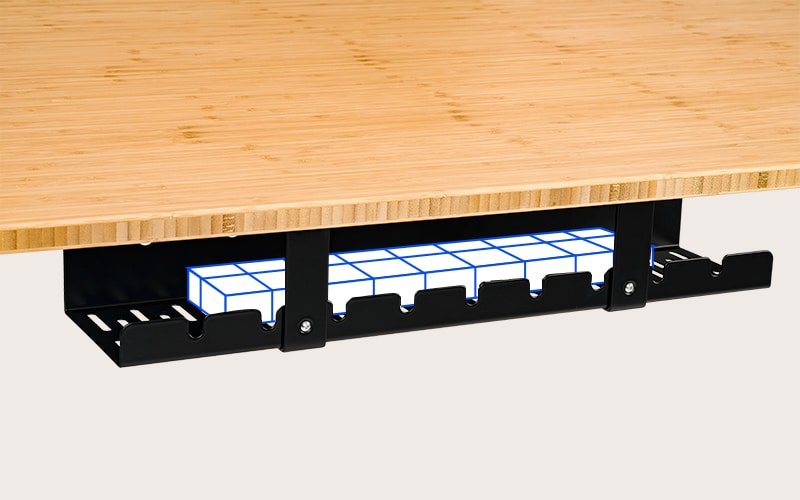
Imagine a storage item that would occupy the same space as the lower crossbar of an identified F600. A tall maximum desktop position does not establish that the item clears the bar. Consult the corresponding drawing and check the actual assembled desk before treating the storage position as usable.
First investigate a permitted location outside the bar's path. Changed feet or casters, the item's complete outline and movement through the required positions still need checking. Do not assume a different foot option preserves every clearance shown in a drawing, or remove structural parts to create room.
This hypothetical case is a reason to verify the layout, not a tested installation or permission to alter the frame.
Match the complete assembly before spending
Record the top's dimensions, material and thickness, the controls and their revision, and the supports and accessories fixed beneath it. A matching frame name does not establish that a proposed top, control box or mounting kit can be reused. Ask for the specification of the exact component that resolves the diagnosed problem.
For a used desk, inspect the delivered parts and condition, obtain the seller's terms, and include collection, missing hardware and assembly in the comparison. A low purchase price does not establish remaining useful life. If there is a fault, use the matching troubleshooting guidance and an appropriate diagnosis before ordering parts by name alone.
Warranty eligibility also needs its own record. The October 12 policy review recorded original-purchaser and non-transferable terms, with orders before April 14, 2021 directed to previous terms. Do not give a second-hand purchase the coverage of a current new order. Preserve the original invoice and ask which terms apply to the actual desk and claimant.
The warranty shipping section, read on October 13, states that approved claims submitted within the first year after purchase have manufacturer-paid return/replacement shipping within the contiguous US; for claims submitted later, warranty shipping is the customer's responsibility. Outside the contiguous US, the customer pays. That cost can matter to a repair budget even when a part is covered.
Keep, repair or research a different generation
- Working identified V2: keep it if the measured height, layout and task requirements are met; a newer feature list is not itself a replacement reason.
- Fault or incomplete used desk: resolve the component identity, diagnosis and complete cost before ordering or collecting it.
- New UPLIFT configuration: read the V3 guide as a different generation, or use V2 versus V3 to examine what a change would actually solve.
The next useful result is a matched frame-and-parts record, not a generic brand recommendation. DeskSpaceLab has not measured V2 deflection, noise, durability or the condition of your unit.
Sources and dated scope
Both specification sheets were checked on October 13, 2026 using readable PDF text. Frame-only classification and the F600 lower-edge arrow interpretation reuse the recorded October 12 check; no new diagram was visually inspected in this update.
- Standard V2 FRMA-2 sheet — revision 1.4, US Standard C-frame.
- F600 V2-Commercial sheet — revision 1.1, distinct Commercial C-frame.
- UPLIFT warranty — shipping summary read October 13; ownership, transfer and previous-term qualifications reuse the October 12 policy review. This is not a new complete policy or used-sale eligibility check.
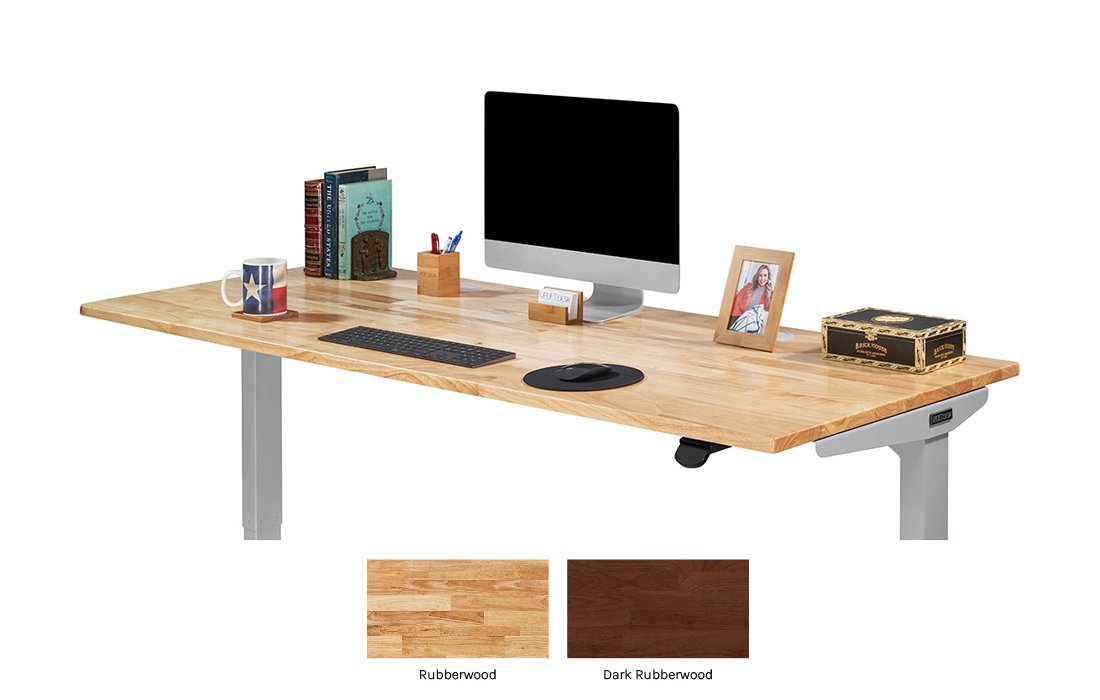
Illustrated configuration: UPLIFT Desk official source. Legacy UPLIFT V2 with a rubberwood desktop, as identified in the official source. Desktop finish and current stock require separate checks.
About this guide: An editorial research profile, not an individual reviewer. Explains model specifications, configuration choices and the limits of manufacturer evidence. Editorial profile
Keep planning your workspace.
Use the sources and related guides to choose your next step.
Explore standing desks →