Chairs · Buying guide
FlexiSpot C7: keep the seat you like, change how it adjusts
Start with foam or mesh, then look for the movement missing from your current chair and the freedom to pull in to your desk.
The quick decision
Is it right for your day?
Consider an identified ordinary C7 when its seat material and confirmed adjustment solve a limitation in your current chair. Let desk access, arm position and headrest fit decide whether that feature is useful to you.
- The family page mixes revisions, so confirm the exact supplied controls
- An appealing seat can still have arms or a headrest that do not suit your setup
Research-based guide. DeskSpaceLab has not tested this product. Sources and review scope
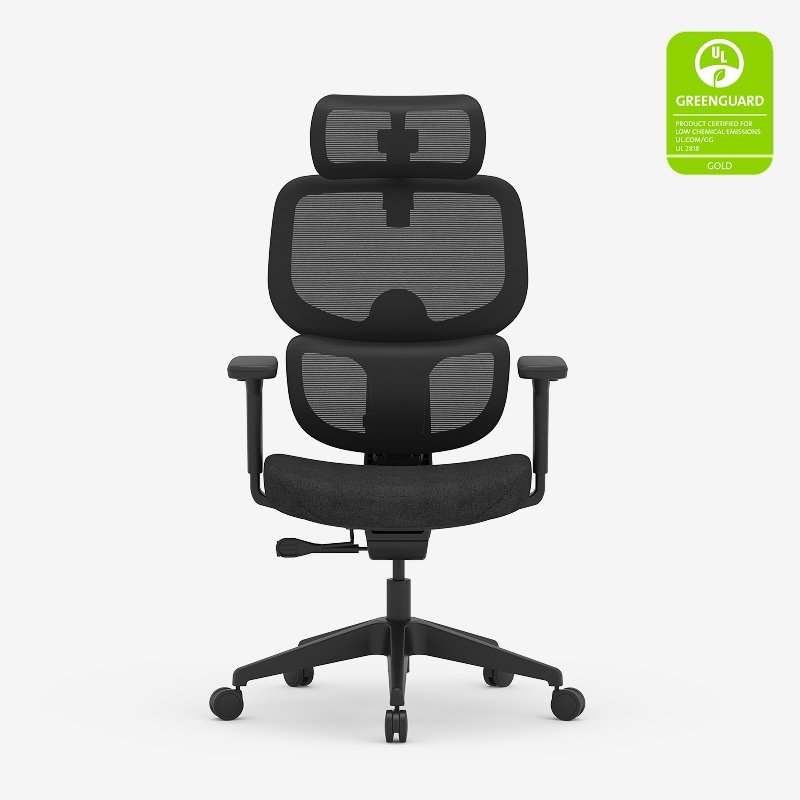
Liking a cushioned seat does not mean you have to keep a chair whose position cannot change. The ordinary FlexiSpot C7 offers foam and mesh choices, with adjustments worth investigating when you can name what your present chair lacks. Start with that missing movement, rather than the longest feature list.
Keep the surface you already prefer
Choose foam if retaining a padded seat is part of the appeal. Investigate mesh if that is the surface you want beneath you. Neither material is a promise of comfort; the useful starting point is your own preference, followed by how the selected chair lets you sit at the desk.
A seat slide can change where the seat's front edge meets your legs while keeping the backrest available. That is a specific reason to investigate C7 when a fixed seat position is the problem. If your current chair already supplies the surface and movements you need, replacing it may add little.
Give every adjustment a job
FlexiSpot describes seat sliding and adaptive lumbar support on its US C7 page, but the listing also contains different revisions and configurations. Confirm the supplied version and the exact support, arm and recline movements you want. C7 Max, Morpher and Pro Max are separate models, not interchangeable names for the ordinary C7.
Arm controls matter when they allow the keyboard approach you prefer. A headrest matters when it meets you in a useful position. The existence of either adjustment does not establish that its useful movement will match your body or furniture.
A good seat is only part of a good fit
Jonathan Lamont's MobileSyrup review describes the tension clearly. He liked the foam seat and mesh back after several months, but found the arms interfered with his preferred desk approach and reported a headrest that moved down under pressure. Brad Shankar's second opinion on the same page did not report a comparable arm problem. FlexiSpot offered the trial; these Canadian experiences concern earlier units, not every current US C7.
Use that experience to frame a hypothetical choice. Imagine a reader who likes foam but wants to move the seat independently of the backrest. An ordinary C7 that supplies the required slide belongs on the shortlist. Before that becomes a purchase, the reader also checks whether its arms allow the intended desk approach and whether the headrest can stay out of the way when unwanted. A liked seat cannot compensate for losing the working position the reader came to improve.
This is our illustrative decision based on questions raised by the attributed review, not a chair we fitted or tested. If the seat choice and confirmed controls serve your setup, inspect the exact configuration together.
View FlexiSpot C7 at FlexiSpot
Manufacturer link, not an affiliate link.
Make the return question specific
Before ordering, ask how an assembled C7 can be evaluated and returned, which condition is acceptable, what packaging must be kept and who arranges or pays for transport. A broad free-returns headline does not settle those questions for the selected chair. We have not established a free assembled trial or current chair-specific return shipping coverage.
Keep the version and selected seat material with the order. A photograph showing mesh or a footrest does not establish the package you will receive.
Let the missing movement settle the choice
Choose C7 for a confirmed adjustment that improves on a real limitation, while keeping a seat material you want. Keep your present chair if its position and support already serve your day.
For an alternative based around mesh and arms that follow recline, read C7 vs original Doro C300. If the newer SIHOO generation is the one you mean, use the separate C7 vs C300 Pro V2 comparison; its features do not belong to the original C300.
Sources and review scope
The US ordinary C7 page was checked October 29, 2026. Its mixed revisions make exact configuration confirmation important. The FlexiSpot shipping policy was attempted that day, but its complete clauses were unavailable. The earlier policy reading is dated October 12; current assembled-chair return eligibility and transport costs remain to confirm.
Lamont's February 23, 2025 account was reread October 29, 2026. His earlier Canadian trial and personal fit do not establish the current US version's comfort or failure rate. DeskSpaceLab has not tested this chair or measured a health benefit. The manufacturer photograph and hypothetical scenario are not evidence of an independent product trial.
About this guide: DeskSpaceLab Product Research · Our editorial approach and affiliate policy